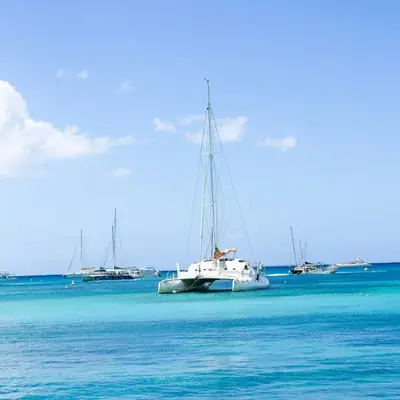
A week from Martinique: St Lucia, Bequia, the Tobago Cays
The most seagoing of the one-week Caribbean routes: from Le Marin on Martinique south past St Lucia to the Grenadines — Bequia, Mustique and the reef of the Tobago Cays — and back the same way. About 190 nm, including two passages of nearly 60 nm in the open trade-wind sea, ten hours each with a dawn start. The other legs take two to three hours; a route for an experienced crew with stamina to spare.
Day by day
Marina du Marin
- Le Marin14.471, -60.872
Take over the yacht after 17:00 at Marina du Marin, 45 minutes from Martinique airport. Le Marin is one of the largest yacht harbours in the Caribbean, with supermarkets close to the marina, and provisioning for the week is easier and cheaper here than further south. The Cul-de-Sac bay behind its reef stays calm even in a fresh trade wind.
Le Marin → Rodney Bay, St Lucia
- Rodney Bay14.076, -60.949
Past Diamond Rock, which the British commissioned as a warship in 1804, and across the St Lucia channel — the first open-water passage, with the trade wind on the beam. Rodney Bay brings the first change of flag: customs and immigration are in the marina itself, so clear in while the crew swims.
Rodney Bay → Bequia
- Bequia13.008, -61.242
The long passage south: a dawn start past the Pitons, down the lee of St Vincent and across the Bequia channel into Admiralty Bay. Under St Vincent the wind dies in the shadow of the mountains, then gusts down the valleys — reef early. Bequia is a sailors' island with a waterfront of bars; you clear into St Vincent and the Grenadines in Port Elizabeth.
Bequia → Mustique → Tobago Cays
- Mustique12.877, -61.190
- Tobago Cays12.631, -61.355
Down to Mustique for lunch on a mooring in Britannia Bay — moorings there are compulsory and paid. Then south into the Tobago Cays: five uninhabited islets inside a horseshoe reef, with turtles grazing in the shallows. Come in by day with the sun high, reading the depth from the colour of the water.
Tobago Cays → Bequia
- Bequia13.008, -61.242
A morning with the turtles and the reef, then back north under the lee of Canouan to Bequia for a second night. In the evening: the forecast, the plot for tomorrow's long passage, and clearing out of St Vincent and the Grenadines in Port Elizabeth while customs is open.
Bequia → Rodney Bay
- Rodney Bay14.076, -60.949
The second long passage, again from first light: north through the Bequia channel, along St Vincent and across to St Lucia, with the Pitons for the last hour. Customs again in Rodney Bay, and dinner in neighbouring Gros Islet.
Rodney Bay → Le Marin
- Le Marin14.471, -60.872
The St Lucia channel once more, this time closer to the wind, so the morning goes on tacking and reading the sea. Into Le Marin by mid-afternoon: clearing back into France, fuel and handover. A night aboard in the marina, flight home the next day.
Coordinates are approximate, for the harbour or bay. Paste them into Google Maps or a chartplotter, and check the chart and pilot book before you moor or anchor.
Good to know
- Season: December to April, at its best from January to March. The trade wind blows from the north-east at 15–25 knots, with two to three metres of sea in the channels between the islands. June to November is hurricane season, and long passages then are planned only on a fresh forecast.
- Weather: both channels are sailed on the morning forecast. In a strong north-easterly, wait a day in Rodney Bay or Bequia and cut the Grenadines down to Bequia and Mustique — the loop drops to about 130 nm, though the two long passages remain. Nothing is sailed at night.
- Formalities: three countries means clearing at every change of flag — out of France, in and out of St Lucia (twice, going and coming back), in and out of St Vincent and the Grenadines, and back into Le Marin. The fleet must allow the boat to leave Martinique, so check when you book; carry the boat's papers, passports and a crew list. The Tobago Cays are a marine park with a fee per person per night.
- Logistics: Martinique airport (FDF) is 35 km away, about 45 minutes by taxi to Le Marin, with direct flights from Paris. Do the big shop on Martinique: Bequia and Mustique have less choice and higher prices.
When to go and what it costs in the Caribbean
Median € per berth per week from the agent's latest check, monohulls; each month's page has both boat types, a chart and boats departing that month.
Discounted boats in the Caribbean
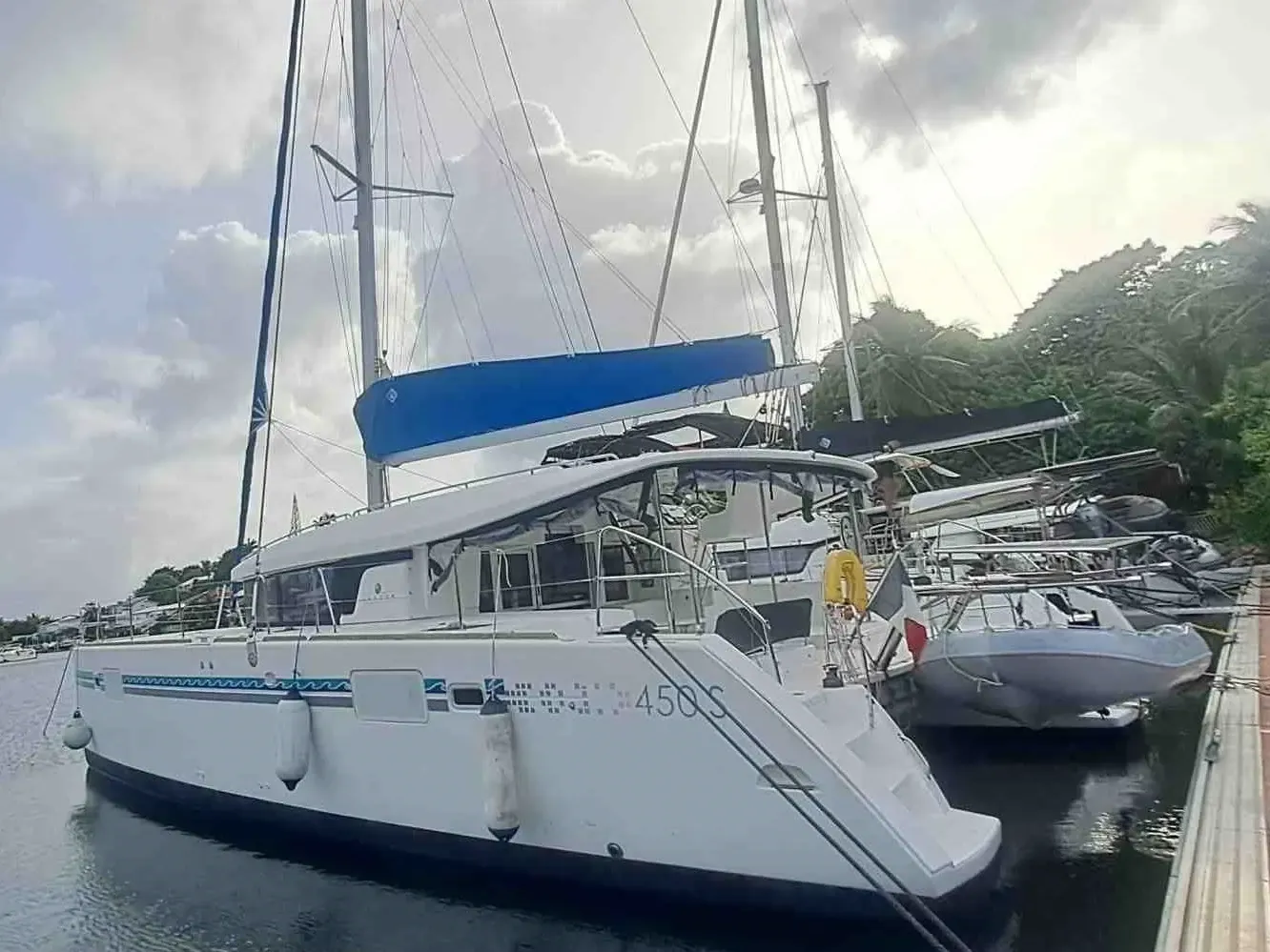
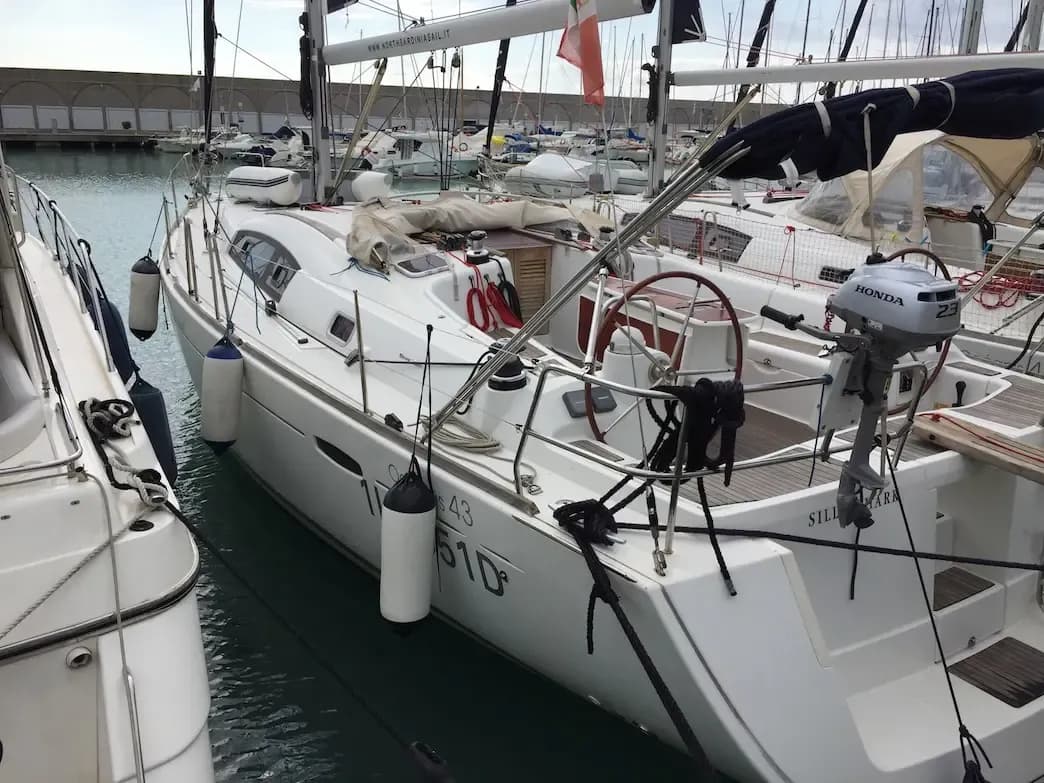
All boats in the Caribbean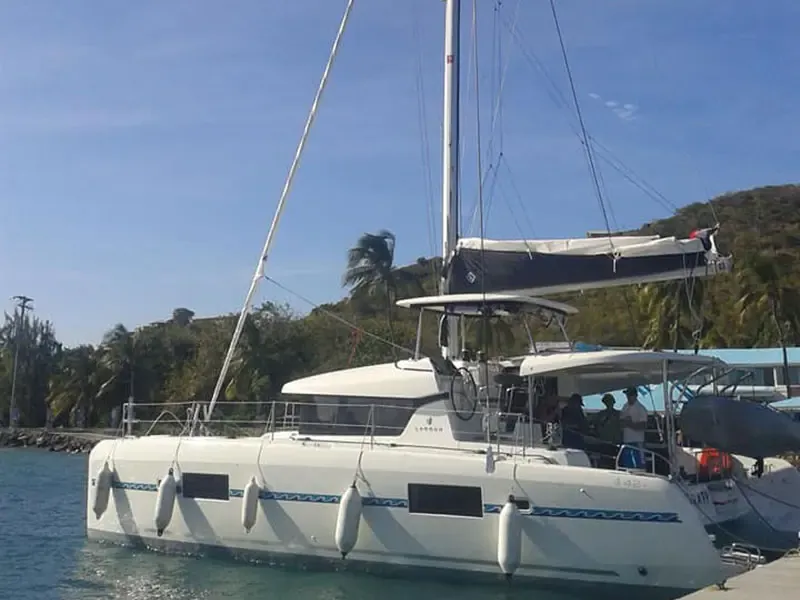
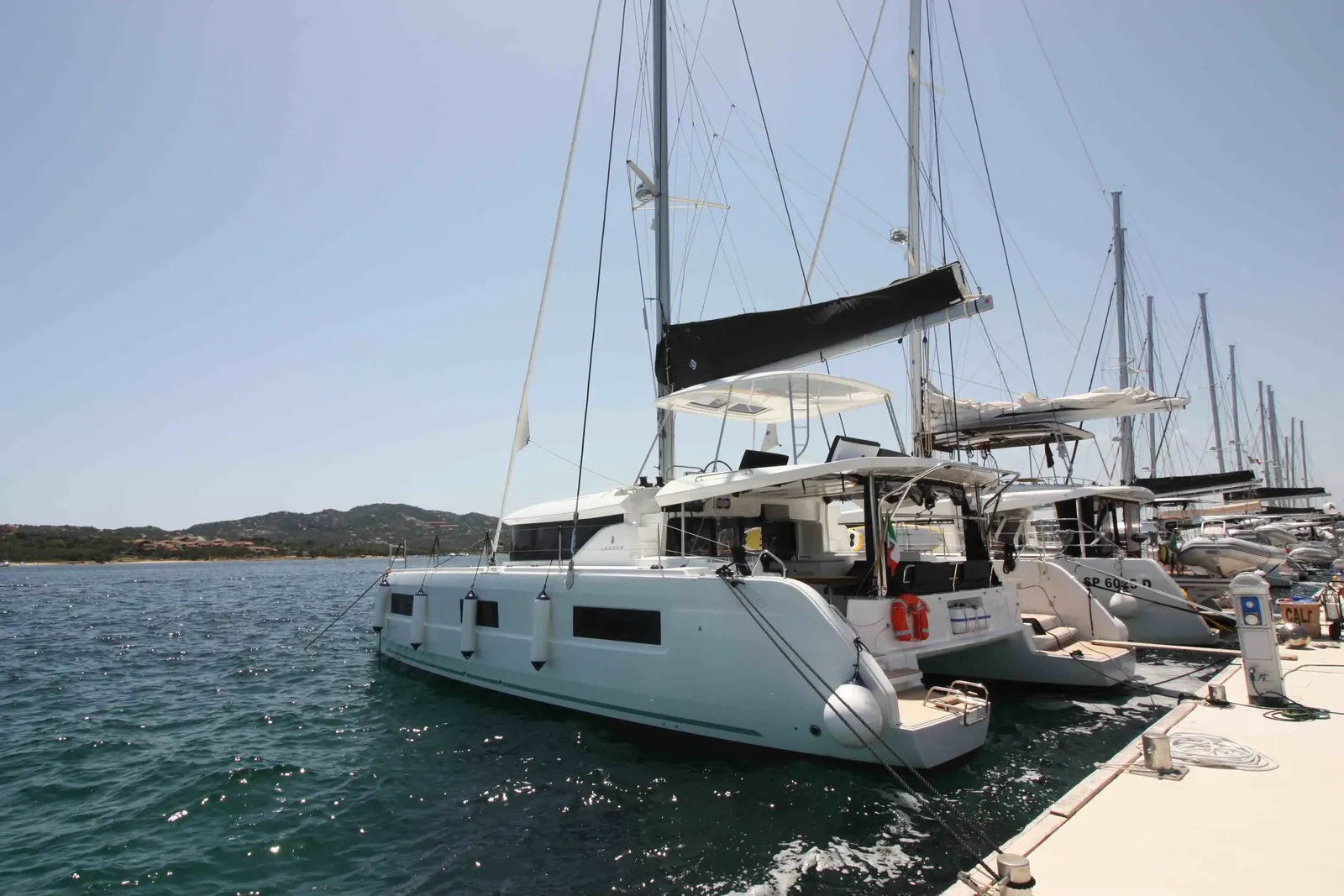
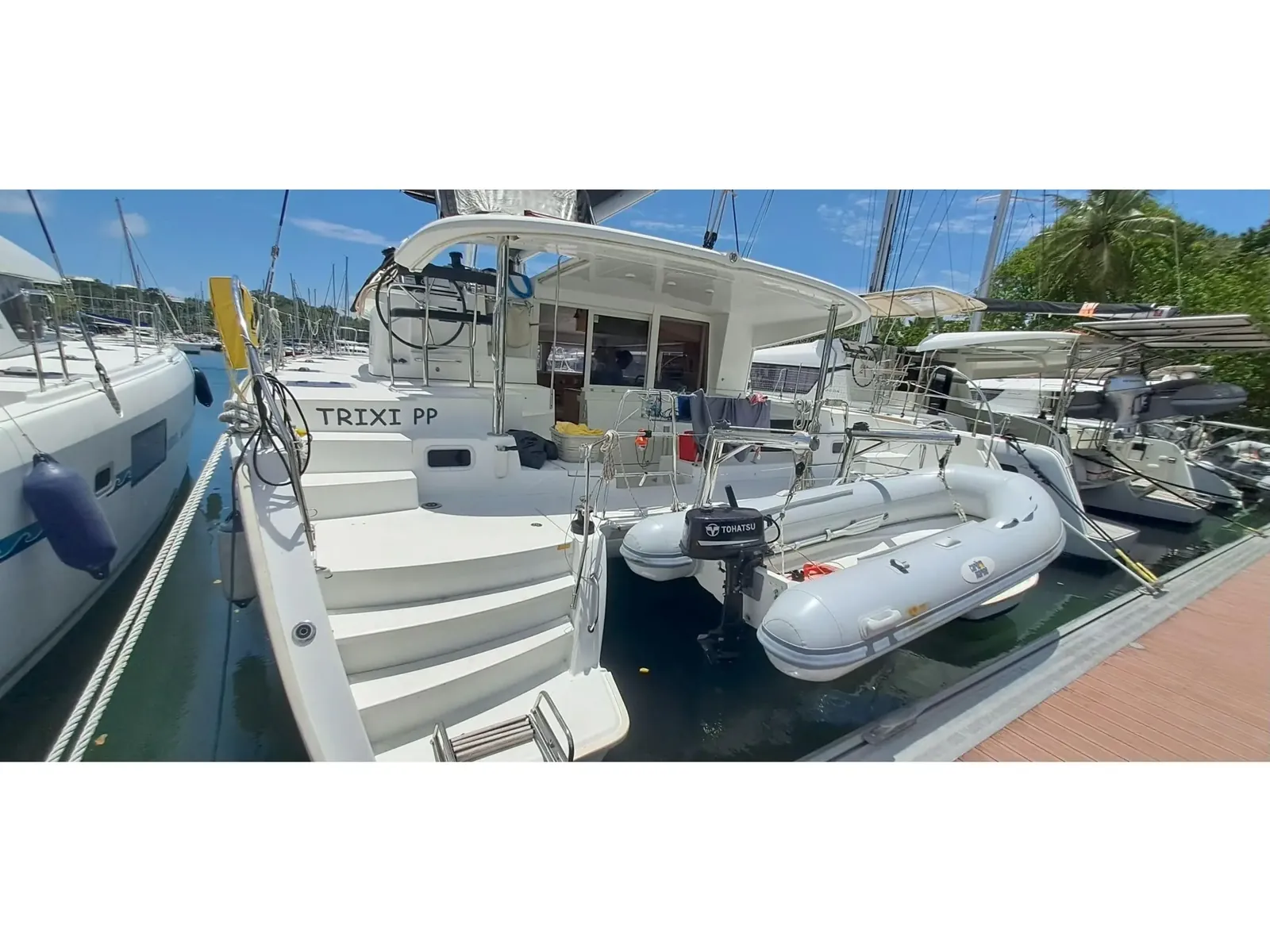
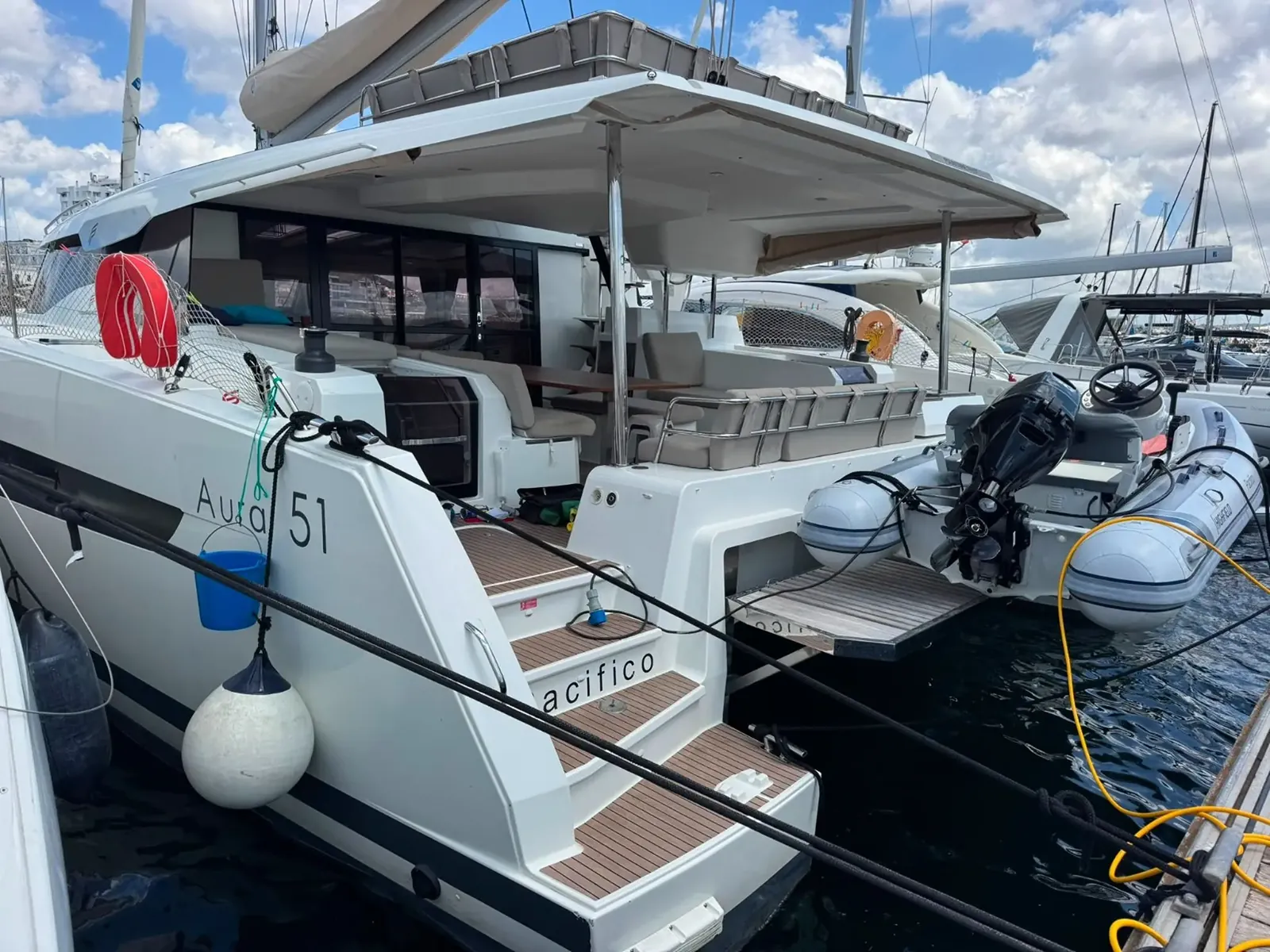
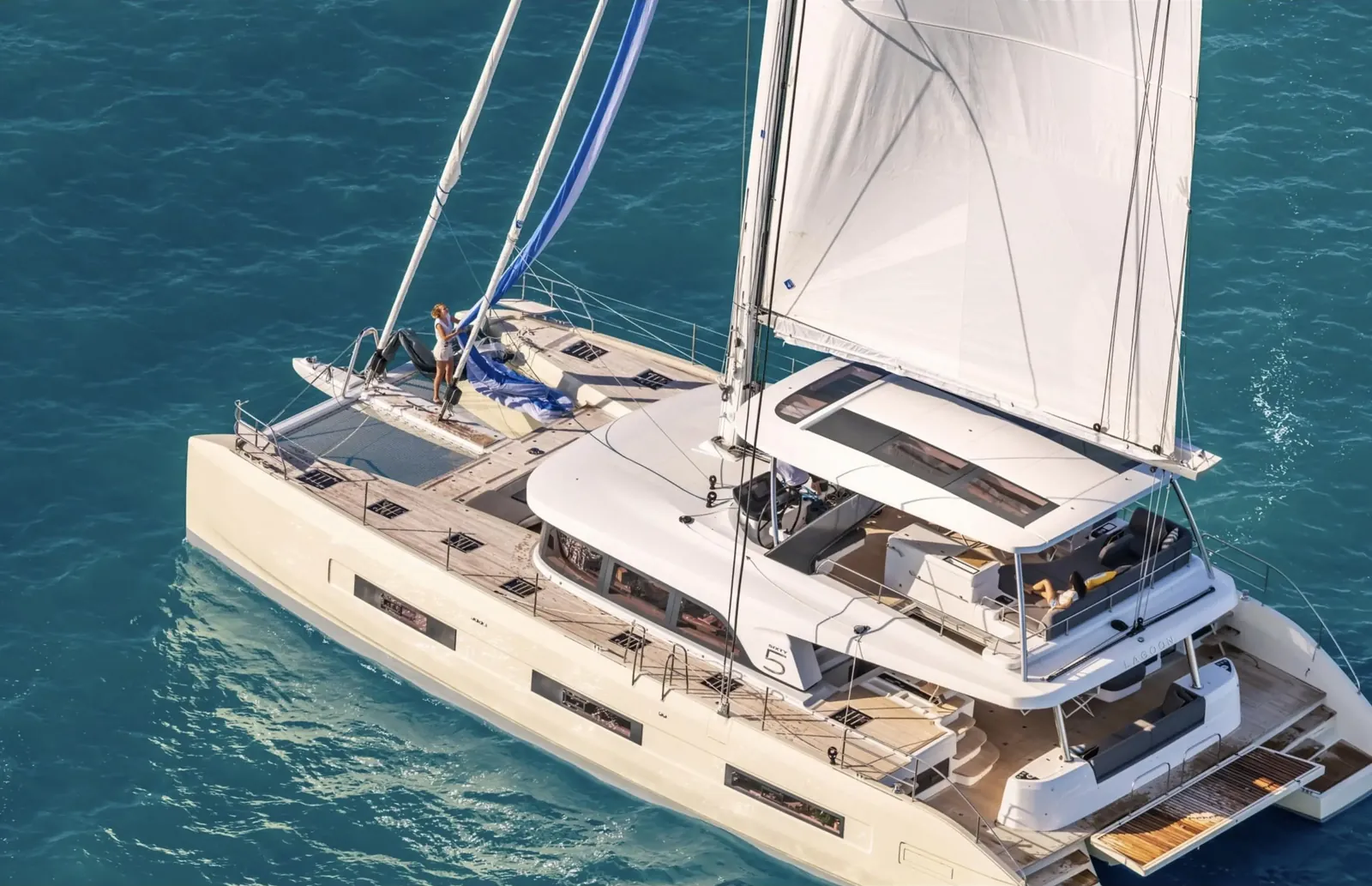
How long is the Martinique — Grenadines route and where do you stay overnight?
7 days and about 190 nautical miles in a loop, starting and finishing in Martinique. Overnight stops in order: Le Marin, Rodney Bay, Bequia, Tobago Cays, Bequia, Rodney Bay. The longest leg is day 3, 60 nm.
When is the best time to sail the Martinique — Grenadines route?
The Caribbean season runs December to April: dry, with a steady 15–20-knot trade wind. The most expensive weeks are Christmas, New Year and February–March. June to November is hurricane season: boats are cheaper, the weather riskier; May is a transition month. The fleet is mostly catamarans, booked 4–8 months ahead. By the agent's latest checks (monohulls), the cheapest month is October: a median of €510 per berth per week. The most expensive is February, at ≈€778. The most boats with 20% off or more are in November: 11%. The agent checks the current month and the next five; each month has its own page with the numbers.
How much does a yacht for this route cost?
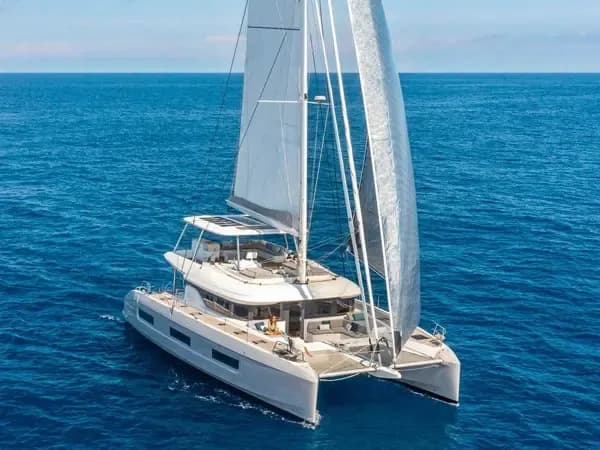
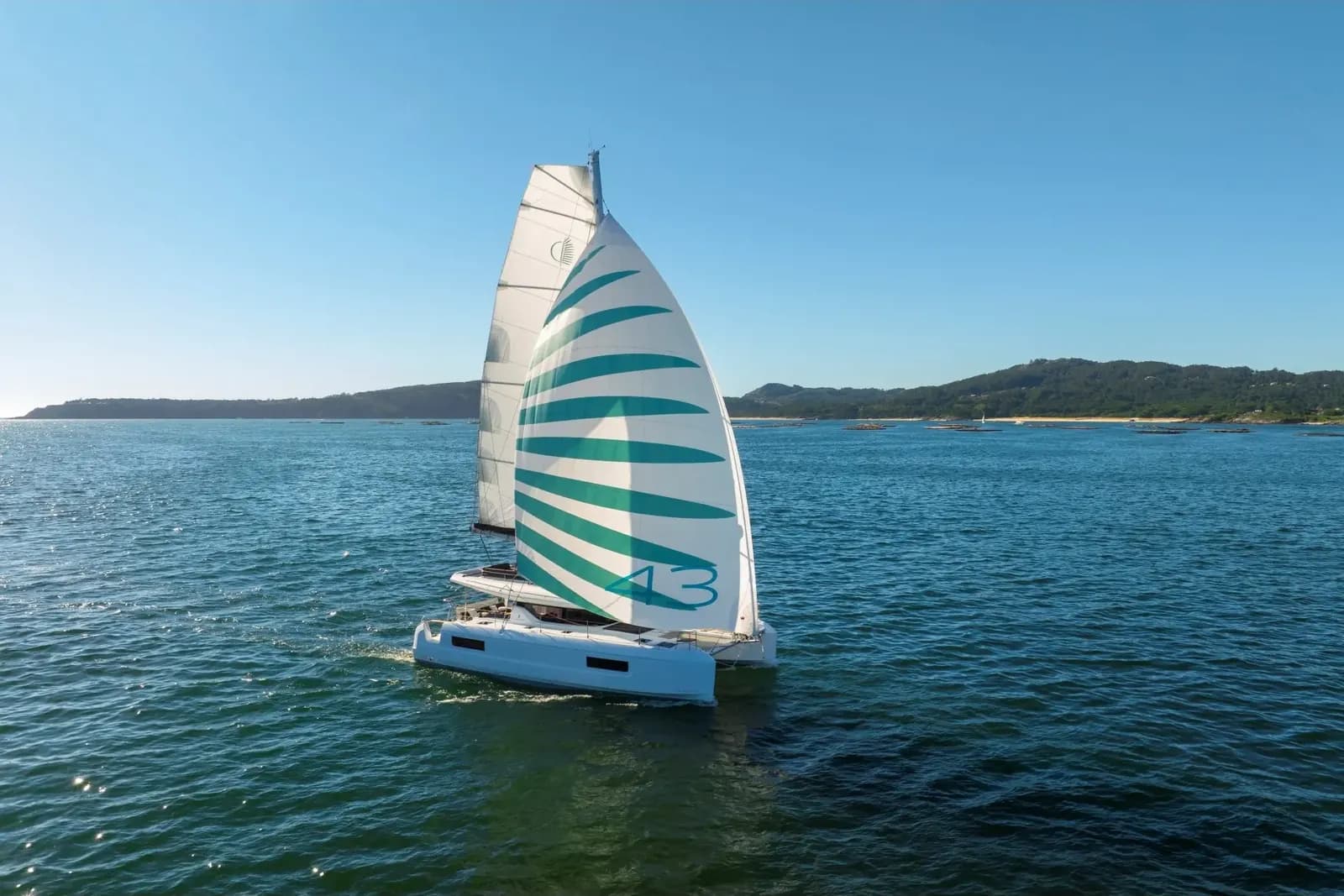
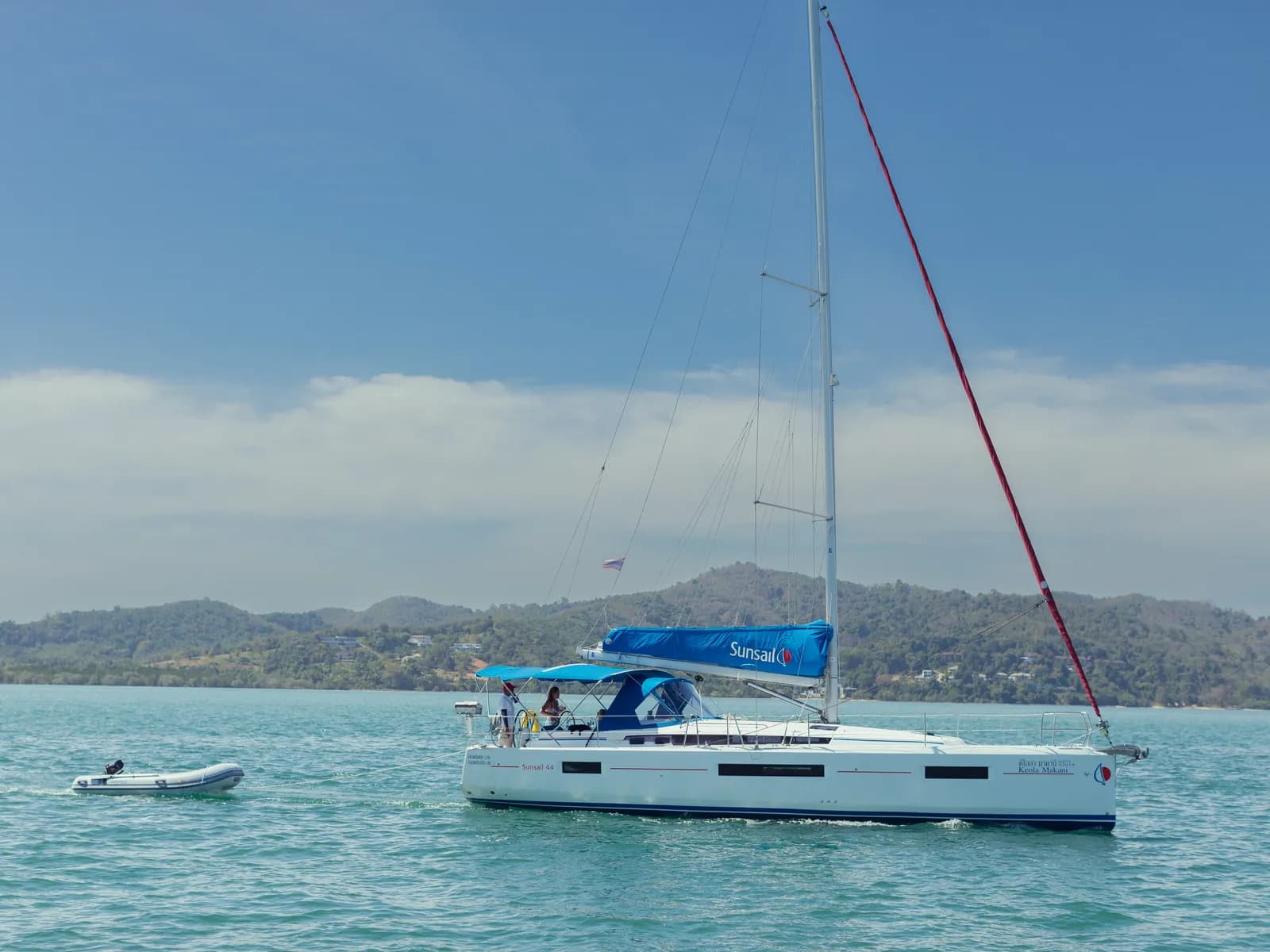
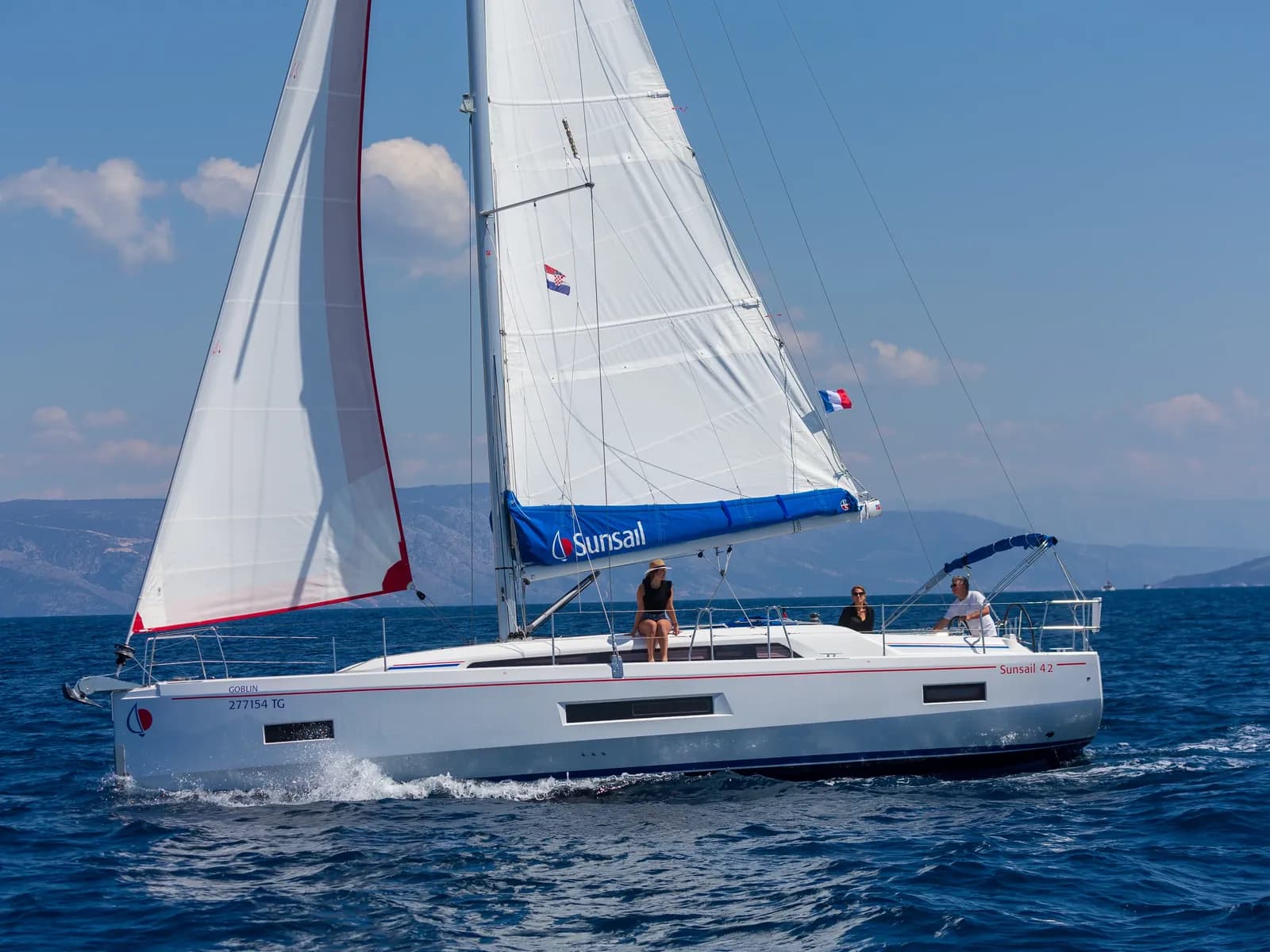
A whole boat in the Caribbean for a week starts from €1,790 in the agent's current selection: the cheapest discounted week departing in the next three months. Prices per berth by month are higher up the page; the boats are under “All boats in the Caribbean”.
Do I need a licence to charter a yacht?
For a bareboat charter (no skipper or crew provided), yes: a skipper's licence and, as a rule, a VHF radio certificate. Without a licence, we add a skipper, paid separately from the boat price.
What's included in the boat price?
Just the boat, for a week. Usually paid separately: transit log and final cleaning, fuel, marina fees, the security deposit (or deposit insurance), a skipper, cook and hostess if you need them, and extras (SUP board, on-board Wi-Fi, coffee machine, child safety netting).