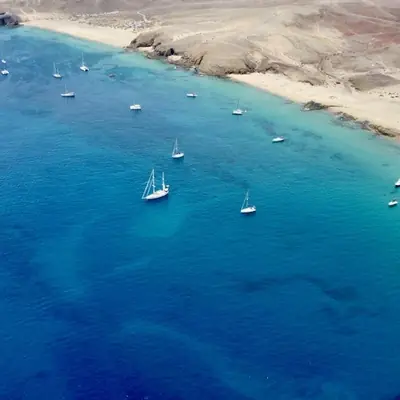
Lanzarote, Lobos and La Graciosa in a week
The eastern Canaries have the most even conditions in the archipelago: the trade wind is steady, without the sharp gusts that come off high mountains, the islands are close together, and only a few miles of the Bocaina strait separate Lanzarote from Fuerteventura. The loop of about 100 nm from Arrecife starts with short legs of 8–12 nm along the volcanic coast and ends with a five-hour passage north to La Graciosa, once the crew has found its feet in the Atlantic swell. A good route for a first week on the ocean.
Day by day
Marina Lanzarote (Arrecife)
- Arrecife (Marina Lanzarote)28.965, -13.538
Boat handover after 17:00, ten minutes from the airport. Before dinner, walk the deck with the whole crew: sheets, winches, the safety gear and where the life jackets live — in the Atlantic you will want that tomorrow.
Arrecife → Puerto Calero
- Puerto Calero28.917, -13.703
A short first leg south-west, beating against the trade wind — the best way to get used to the boat and the ocean swell. It ends with mooring in Puerto Calero, one of the best-kept marinas on the island.
Puerto Calero → Playa Blanca
- Playa Blanca28.860, -13.826
A beam reach south along the volcanic coast; the trade wind freshens in the afternoon, time for the first reef. Night in Marina Rubicón at Playa Blanca, with the Papagayo beaches round the headland for the evening.
Playa Blanca → Lobos → Corralejo
- Isla de Lobos28.750, -13.822
- Corralejo28.740, -13.865
Across the Bocaina strait to Fuerteventura, the first open-water crossing, and a stop at anchor behind Isla de Lobos, a volcanic nature park with a lagoon and a lighthouse. Night in Corralejo, right by the dunes.
Corralejo → Puerto Calero
- Papagayo beaches28.842, -13.787
- Puerto Calero28.917, -13.703
Back across the strait — a day to practise tacks and gybes and a man-overboard drill with a fender standing in for the person. Lunch at anchor off the Papagayo beaches, night in Puerto Calero.
Puerto Calero → La Graciosa
- La Graciosa29.230, -13.505
The longest day: five hours north past Arrecife and under the Famara cliffs to the eighth inhabited Canary island; it is worth planning the passage together the evening before. Caleta de Sebo has sand streets and not a metre of asphalt; night in its tiny harbour or at anchor off Playa Francesa.
La Graciosa → Arrecife
- Arrecife (Marina Lanzarote)28.965, -13.538
South down the east coast of Lanzarote and into the marina by early afternoon. Refuelling and handover, a last night on board.
Coordinates are approximate, for the harbour or bay. Paste them into Google Maps or a chartplotter, and check the chart and pilot book before you moor or anchor.
Good to know
- Wind: the trade wind is steady here, so the plan rarely changes. On a 25-knot day you reef and stay on the sheltered east coast of Lanzarote, swapping La Graciosa for a second day in Playa Blanca. Cross the Bocaina strait in the morning: the wind there picks up noticeably after lunch. The best months are March, April, May, October and November.
- Swell: the north coast is open to the ocean swell, and anchorages work only in the lee: behind Lobos, off Papagayo and off Playa Francesa on La Graciosa. Nights in a marina are safer and calmer.
- Reserves: Lobos and the Chinijo archipelago around La Graciosa are protected natural areas. Landing on Lobos needs a free online permit with a daily cap on visitors; a berth in the tiny harbour of Caleta de Sebo is worth booking ahead.
- Logistics: Lanzarote airport is six kilometres from the marina, about ten minutes by taxi. Fuerteventura is part of the same Canary archipelago, so moving between the islands needs no formalities.
When to go and what it costs in the Canary Islands
Median € per berth per week from the agent's latest check, monohulls; each month's page has both boat types, a chart and boats departing that month.
Discounted boats in the Canary Islands
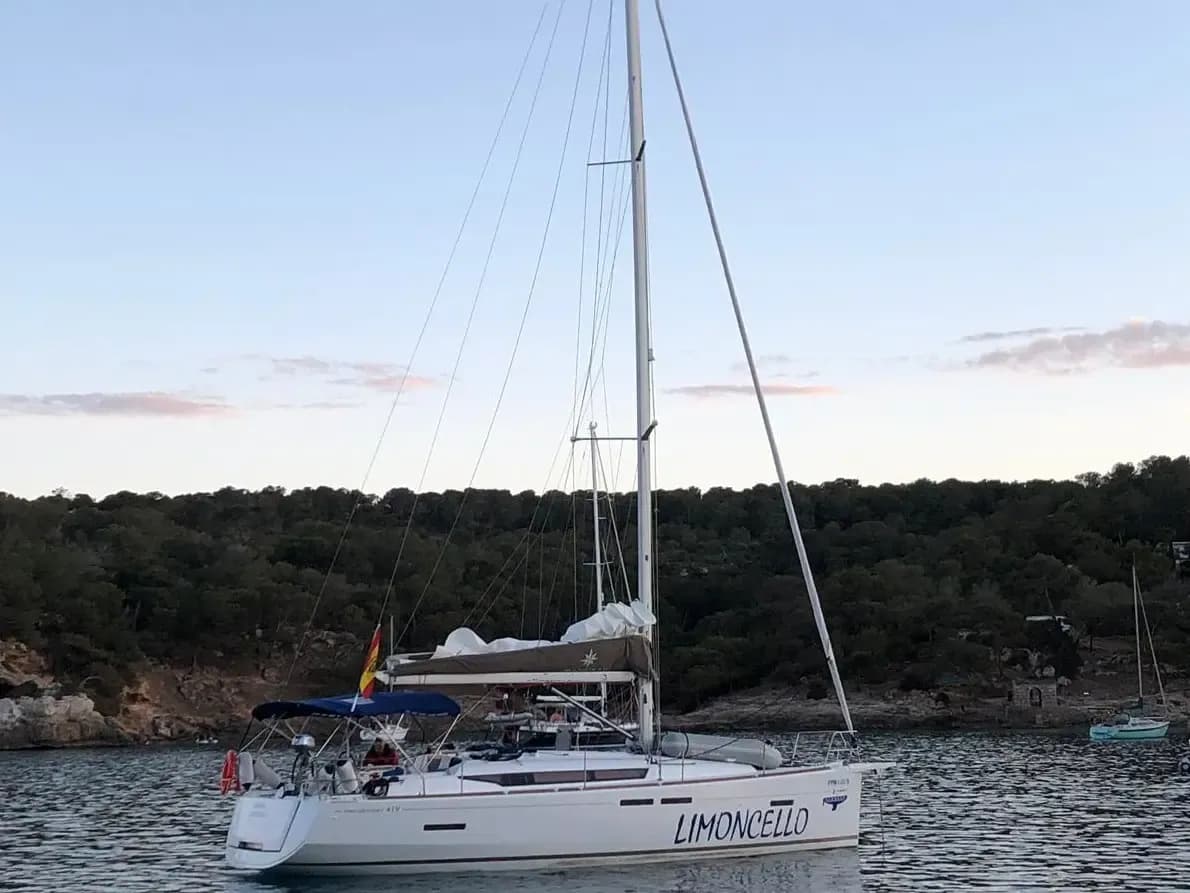
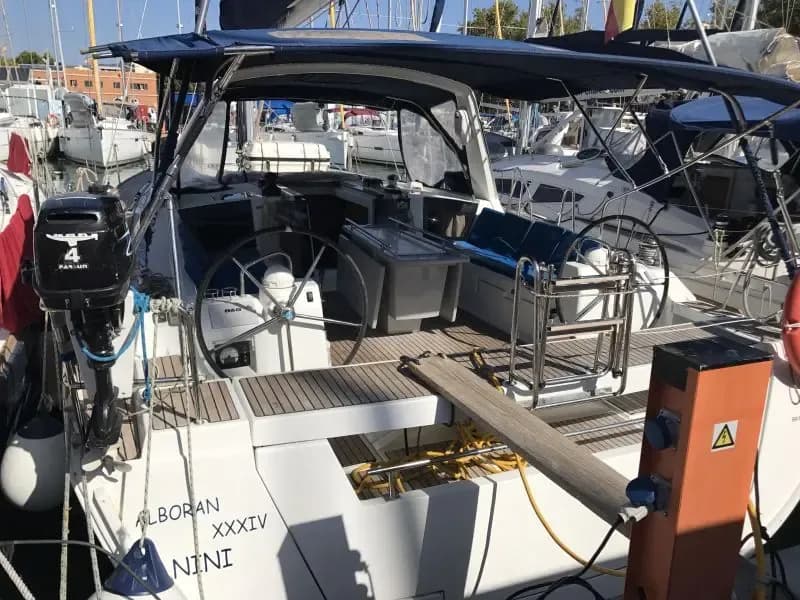
All boats in the Canary Islands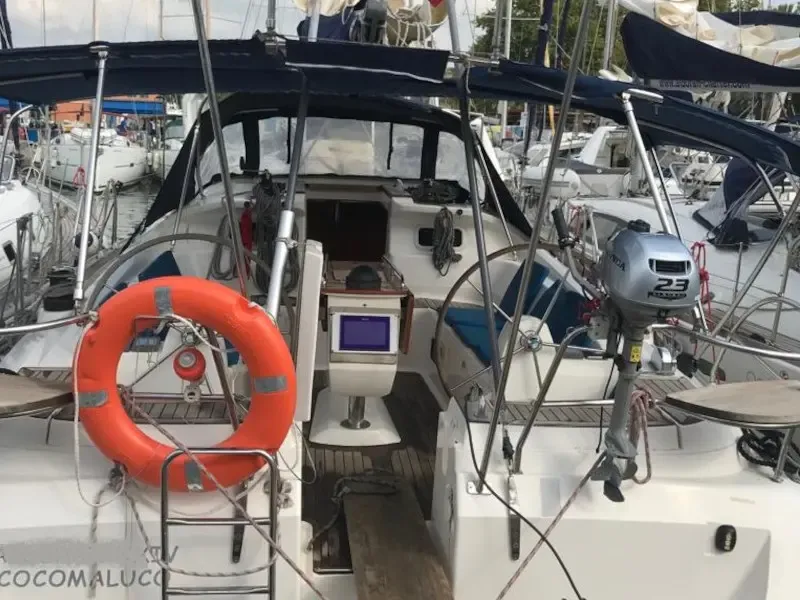
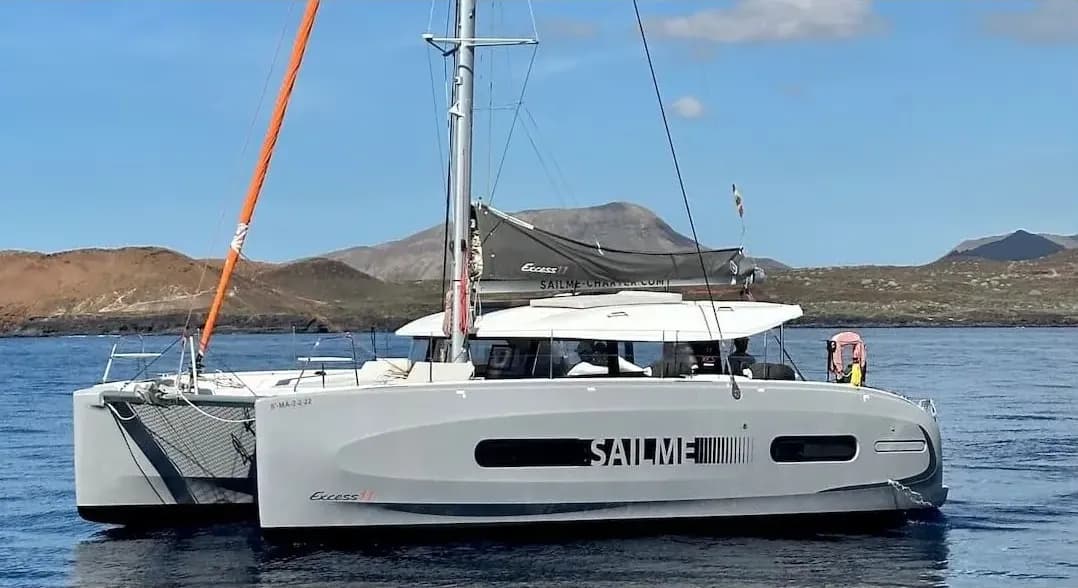
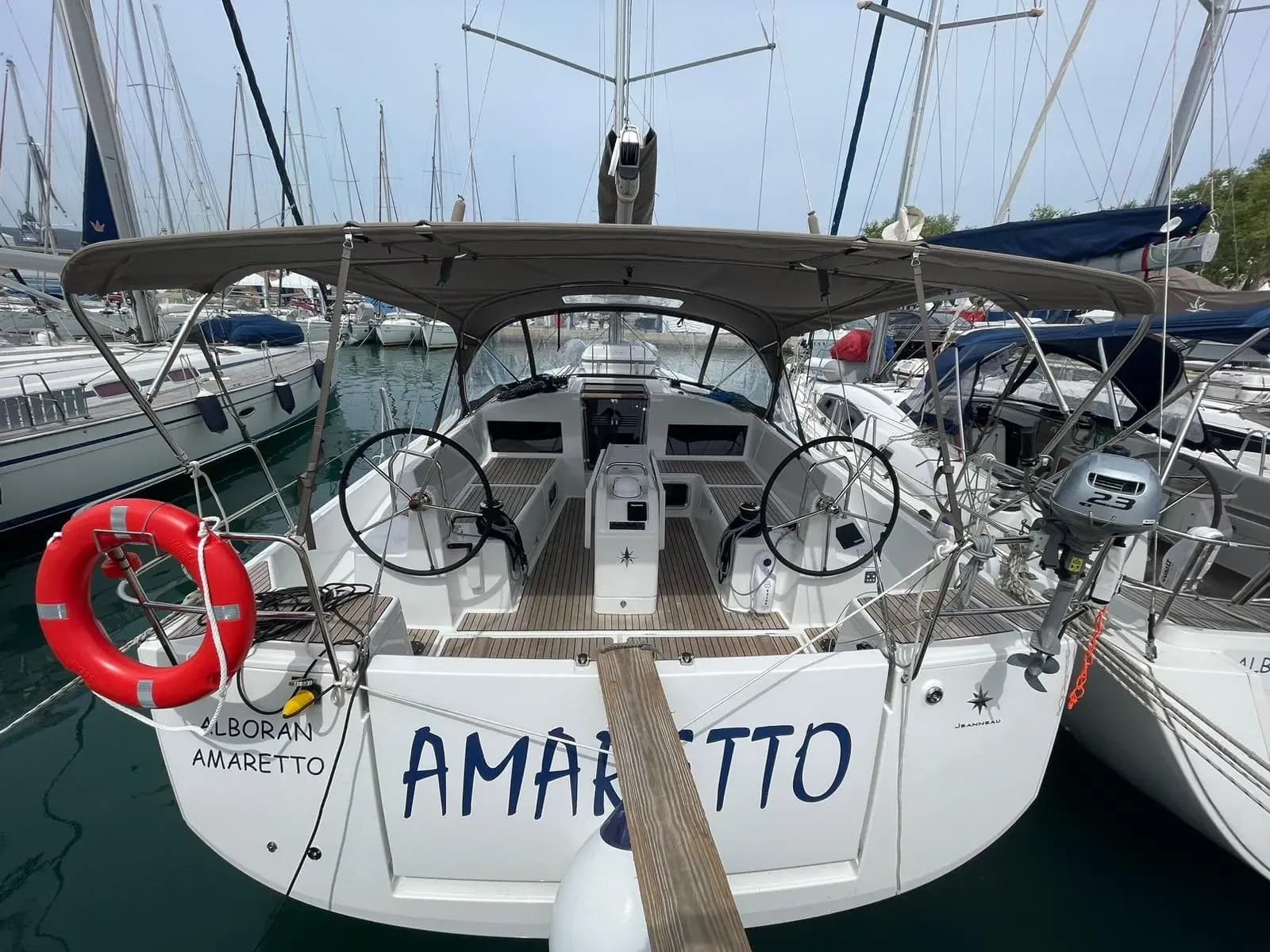
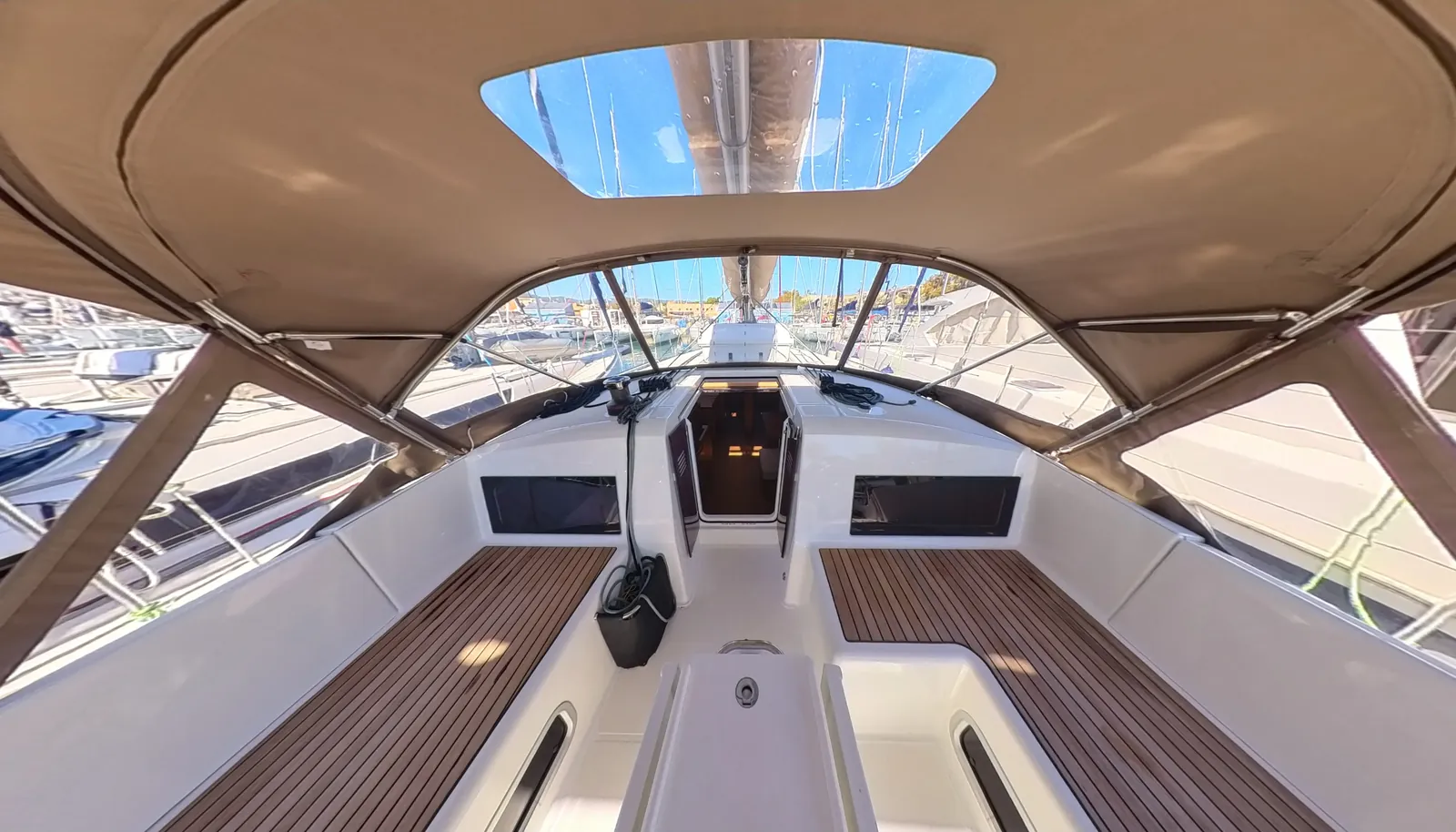
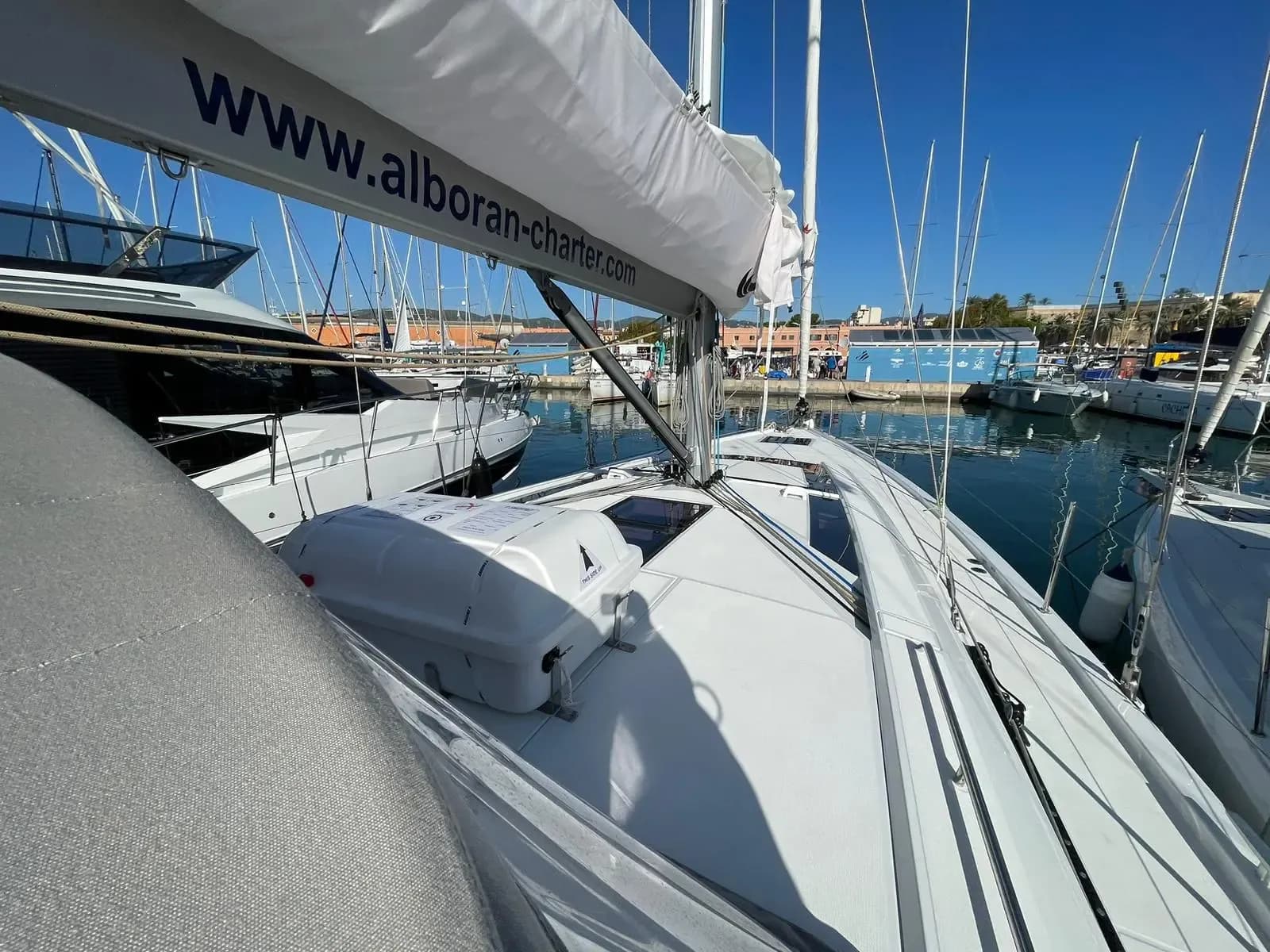
How long is the Lanzarote — Fuerteventura route and where do you stay overnight?
7 days and about 100 nautical miles in a loop, starting and finishing in Lanzarote. Overnight stops in order: Arrecife (Marina Lanzarote), Puerto Calero, Playa Blanca, Corralejo, Puerto Calero, La Graciosa. The longest leg is day 6, 30 nm.
When is the best time to sail the Lanzarote — Fuerteventura route?
The Canaries are sailed all year round. October to April is the main season: the Mediterranean is cold, while here it is warm and the weather settled. In summer the trade wind is stronger and accelerates to 25 knots and more between the islands, which suits experienced crews. By the agent's latest checks (monohulls), the cheapest month is March: a median of €304 per berth per week. The most expensive is February, at €340. The most boats with 20% off or more are in December: 11%. The agent checks the current month and the next five; each month has its own page with the numbers.
How much does a yacht for this route cost?
A whole boat in the Canary Islands for a week starts from €1,573 in the agent's current selection: the cheapest discounted week departing in the next three months. Prices per berth by month are higher up the page; the boats are under “All boats in the Canary Islands”.
Do I need a licence to charter a yacht?
For a bareboat charter (no skipper or crew provided), yes: a skipper's licence and, as a rule, a VHF radio certificate. Without a licence, we add a skipper, paid separately from the boat price.
What's included in the boat price?
Just the boat, for a week. Usually paid separately: transit log and final cleaning, fuel, marina fees, the security deposit (or deposit insurance), a skipper, cook and hostess if you need them, and extras (SUP board, on-board Wi-Fi, coffee machine, child safety netting).